

The central focus of search engine optimization is predominantly centred on content. The Commerce Cloud platform enables marketers and merchandisers to determine regulations for individual pages, which subsequently automate the customization of metadata evaluations that dictate ranking placements.
The implementation of SEO recommendations on Development could be replicated onto Staging and Production platforms, incurring lower costs compared to other alternatives. This results in abbreviated lead times that enhance return on investment.
Sitemaps are a tool used in web development to organise and present the structure of a website's content.
Sitemaps serve as an effective means of conveying the hierarchical organisation of an internet site to search engines. The sitemap is really a structured document in the XML format that enumerates all of the web pages, videos, and images present on a website, with their interconnections. The data is subsequently utilised by web crawler algorithms (such as Googlebot) to find and categorise your material.
The principal objective of sitemaps is to facilitate the comprehension of the interconnectivity among distinct webpages on a website by Googlebot. Establishing interconnectivity among web pages is crucial in facilitating the bot's crawling process, since it creates a navigational pathway for the bot to check out. When SFCC SEO contains pages that lack one way links, such pages may pose challenging for Google to find, thereby rendering them as orphan pages. Sitemaps play a crucial role in this context. Through the submission of a sitemap to Google Search Console, the crawler can be duly notified of the existence of orphan pages, thereby facilitating their discovery and subsequent indexing.
The Demandware platform, commonly known as Salesforce commerce cloud, provides several search engine optimization (SEO) functionalities that may enhance the search engine ranking of one's e-commerce website. The aforementioned characteristics encompass the opportunity to provide distinct product descriptions and adaptable layouts. The platform includes a distinctive URL module that allows the establishment of business regulations for URLs regarding categories, sub-categories, brands, and pipelines. The implementation of these regulations can yield URLs that are uncluttered and memorable, thereby facilitating their identification by se's. Additionally, the guidelines can generate meta tags for every page predicated on predetermined criteria.
Canonical tagging refers to the procedure of specifying the most well-liked version of a webpage when multiple versions of the same content exist. That is achieved by adding a canonical link element to the Html page of the webpage, which indicates to find engines which version of this content is highly recommended the authoritative source.
Canonical tagging seems to generate significant confusion among marketers who lack technical expertise. In the realm of seo (SEO), these tags serve the objective of indicating to find engines the primary page that deserves attribution for several link equity. The utilisation of canonical tags is vital in mitigating the issue of duplicated content and guaranteeing the proper attribution of traffic to probably the most pertinent page.
The canonical tag can be employed in multiple ways, namely being an HTTP header or as a rel=canonical link element. The latter option is suggested since it is deemed to become more dependable. Utilising the former approach entails an increased likelihood of errors since it necessitates the specification of both a canonical URL and a referenced page.
Instances that require canonicalization include product variations, such as for example those regarding sizes and colours, paginated index pages, and category or collection pages which are duplicated. Improper canonicalization may result in internet search engine confusion and diluted rankings.
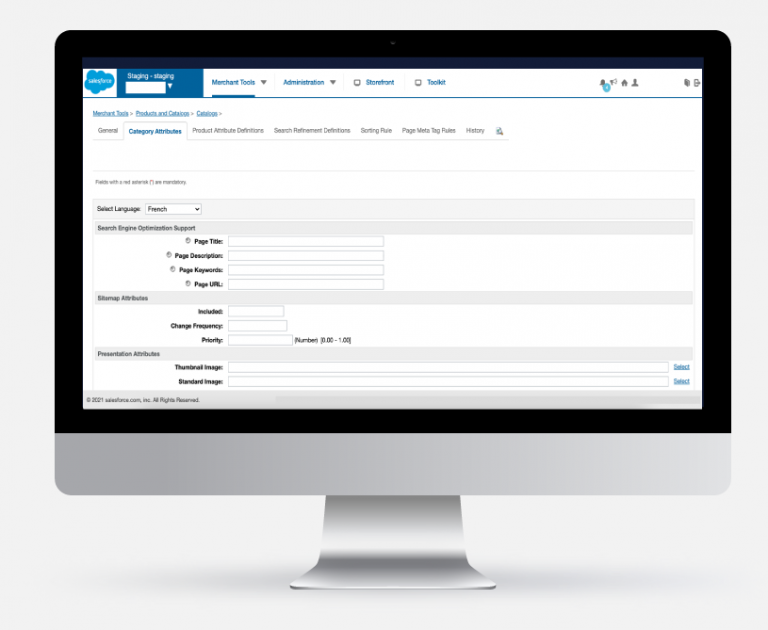
In the event that one is utilising Salesforce Commerce Cloud (SFCC), previously recognised as Demandware, there exist supplementary measures that should be implemented to guarantee appropriate canonicalization. The SFCC platform provides a range of search engine optimisation (SEO) functionalities, including pre-set page titles and descriptions that effectively capture relevant keywords and incentivize user engagement. Although the aforementioned measures are commendable, you should enlist the services of a proficient Demandware SEO consultant to improve your website's optimisation for optimal outcomes.
The procedure of optimising individual webpages so that you can rank higher and earn more relevant traffic browsing engines is commonly known as on-page optimisation.
The term SEO is really a comprehensive concept that encompasses diverse techniques aimed at enhancing the visibility of an internet site on search engines. The optimisation process encompasses both on-page and off-page techniques. Off-page tactics may encompass endeavours related to link-building, whereas on-page optimisation pertains to modifications designed to website content and HTML that enhance the discoverability of pages browsing engine search engine pages (SERPs). salesforce commerce cloud seo encompasses the procedure of enhancing the potency of title tags, meta descriptions, and internal links. Furthermore, the procedure involves generating distinctive meta data for individual pages and employing accurate HTML syntax.
SFCC can be an e-commerce solution that enables enterprises to construct online stores that are optimised for search engine ranking positions. The integrated analytics suite provided by this platform facilitates the enhancement of organic traffic, sales, and gross merchandise value (GMV) for merchants.
SFCC offers a diverse selection of on-page search engine optimisation (SEO) tools that aid businesses in enhancing their online storefront's visibility on se's. These characteristics encompass the ability to tailor XML sitemap files, modify page titles and descriptions, and offer backing for canonical URLs. Furthermore, the SFCC platform offers security functionalities that safeguard confidential customer information.
The implementation of appropriate on-page optimisation techniques is imperative for the expansion of online businesses. Seo (SEO) guarantees the visibility of your web pages to potential prospects that are actively seeking the merchandise or services that you offer. Furthermore, optimising your website can enhance its position on search engine results pages and expand its reach to a broader pool of prospective clientele. Furthermore, the implementation of on-page optimisation techniques can potentially enhance the probability of attaining increased click-through rates from search engines.
The topic of discussion is content strategy.
The development of a content strategy encompasses a comprehensive approach that entails the establishment of messaging guidelines, governance, along with other related aspects. The primary objective would be to strategize and oversee the creation and organisation of content to be able to attain corporate objectives and fulfil certain requirements of the prospective audience. The implementation of a comprehensive content strategy can enhance the overall user connection with a website.
A robust content strategy is imperative for augmenting organic search engine traffic and enhancing conversions, regardless of whether one is utilising Salesforce Commerce Cloud or any other e-commerce platform. This instructional manual presents many tips for enhancing on-page search engine optimisation, optimising uniform resource locators (URLs), and utilising canonical tagging to enhance the discoverability of one's ecommerce website on search engines.
Furthermore, Salesforce commerce SEO is imperative to verify that the configuration of one's ecommerce website is accurate. You can make this happen task by implementing 301 redirects for just about any web pages which are deemed obsolete. Implementing measures to prevent the occurrence of duplicate content and maintaining the uniformity of the structure of your ecommerce website could be beneficial.
An additional recommendation would be to generate a personalised 404 error page. This measure will assist in guaranteeing that users are directed to the appropriate webpage and concurrently mitigate the incidence of 404 errors within the Google Search Console. Furthermore, it is very important to establish titles on pages and meta descriptions that are pertinent to the intended audience. Implementing the suggested strategies could enhance the search engine results positioning of your ecommerce website and augment the influx of organic traffic. Finally, it is vital to optimise the images of your product.